Saturday, May 21, 2022

Visit to Ukraine, May 2022

 Delegation to Ukraine, May 17-18 2022


On May 17 and 18, I (Jeff) was invited to join an official delegation of Church of Scotland officials who were visiting western Ukraine, the area known as Transcarpathia, for a very quick visit. I was invited to go in lieu of our friend and pastor, Rev. Aaron Stevens, who had been invited to join the delegation as a member of the Church of Scotland most closely connected geographically to this region. As Aaron could not attend, he asked me to join the group. 


My colleagues on the delegation were Rev. Balázs Ódór and Anna Derencsényi, both from the Reformed Church of Hungary where Balázs is the Ecumenical Officer, and Anna works in the International Diaconal office. In the delegation from Scotland I was honored to meet the Moderator (or the Chair of the annual General Assembly) the Rt Hon Lord Wallace of Tankerness QC, whom I was allowed to just call “Jim.” Jim is a lawyer, and has had an active political career, as a long-time member of the House of Lords, and a former Deputy First Minister in the Scottish Executive (for my mostly American readers, as best as I can tell, this means Jim is kind of like the former Attorney General, congressman, and Vice-President of Scotland). The trip was essentially set up as a way for Lord Wallace (Jim) to see first-hand how the partnership and financial gifts of Church of Scotland congregations were being put to use in Ukraine. You will find a professional account of our trip written for the Church of Scotland audience here. 


We left Budapest just after breakfast on Tuesday May 17, and by 11:30 we were at the border crossing at Beregsurány, which showed no signs of any special activity coming in or going out. I have been hearing reports that at some border crossings there are now many people going back into Ukraine, while others are still leaving, due to the apparent calming of violence in parts of the country. 


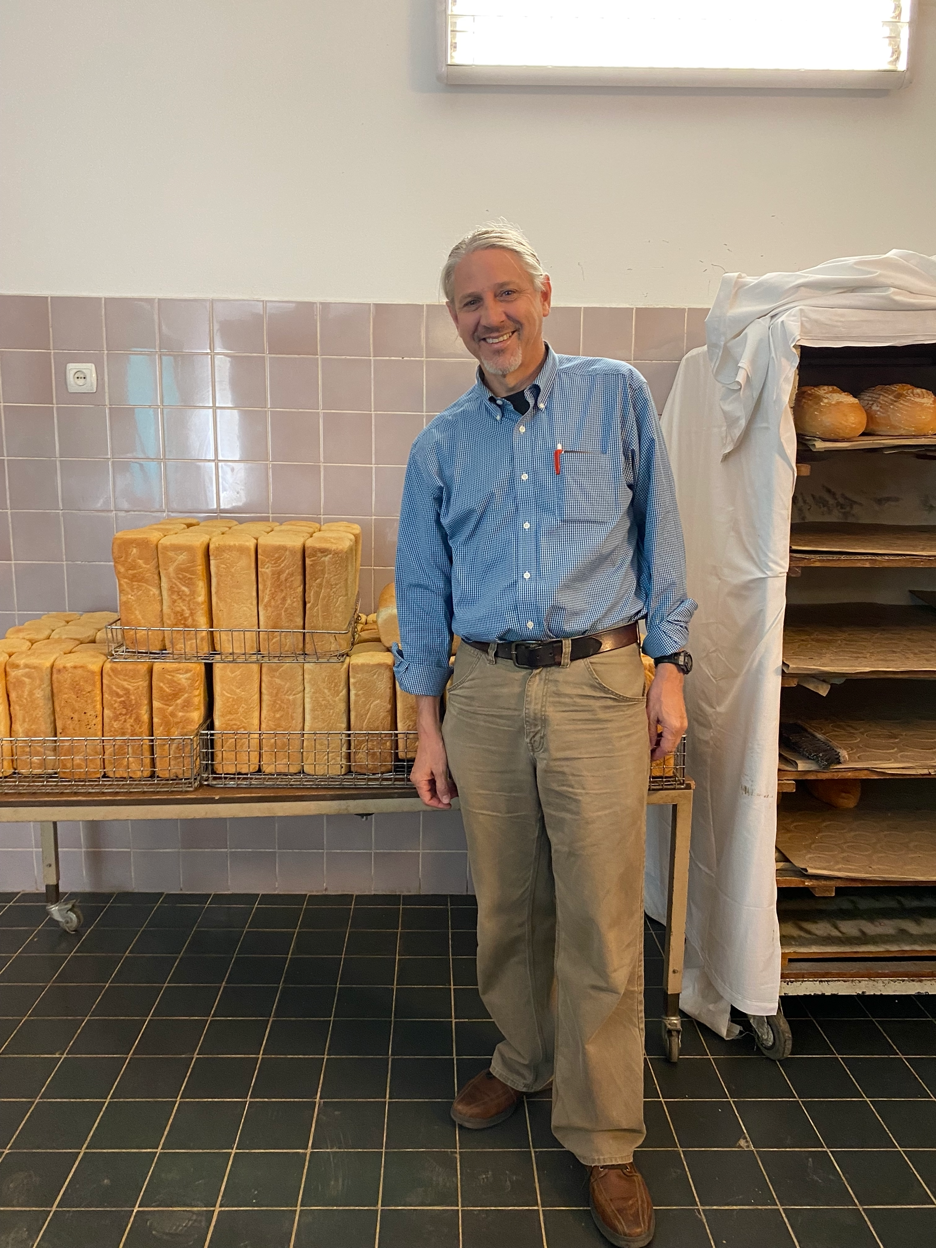
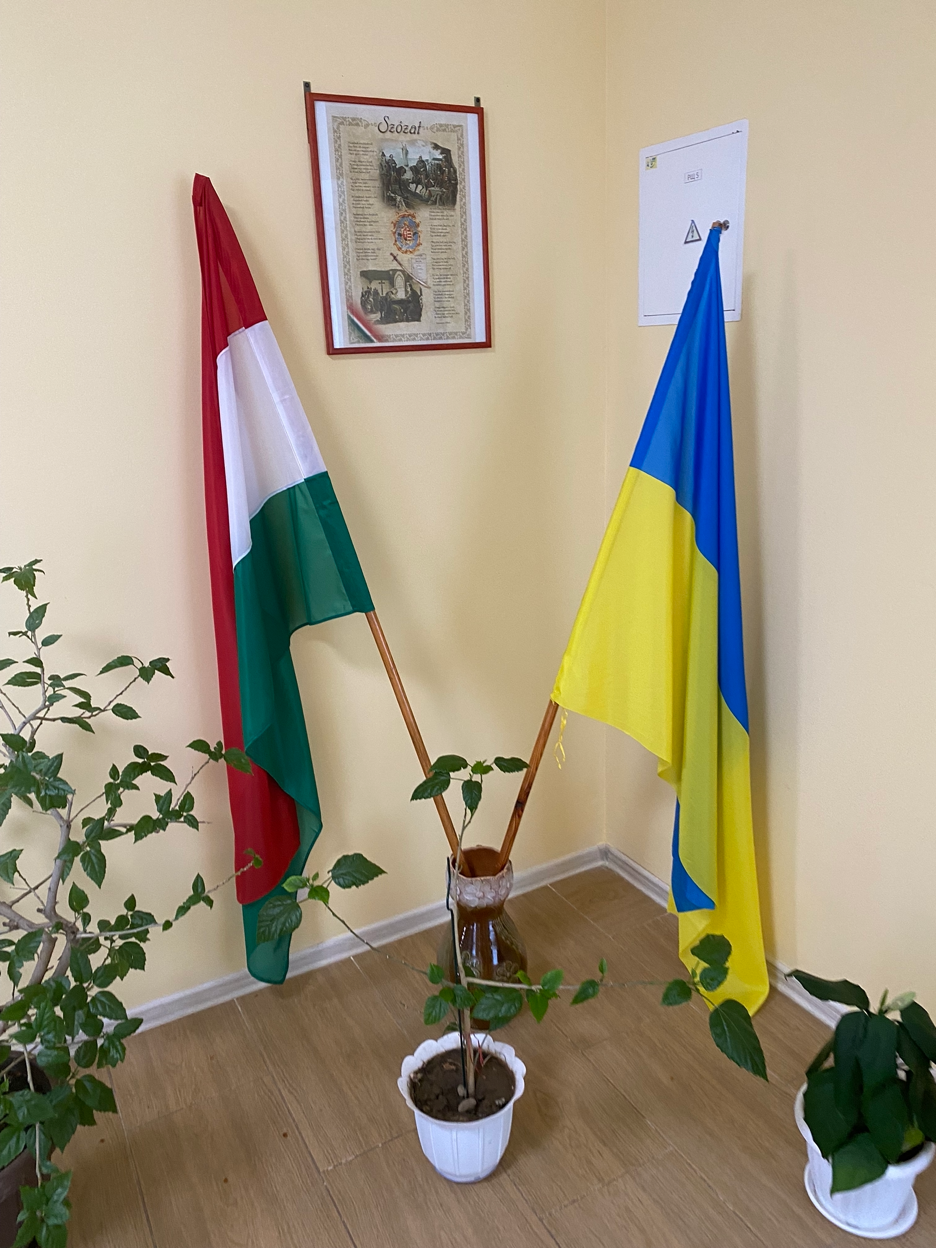
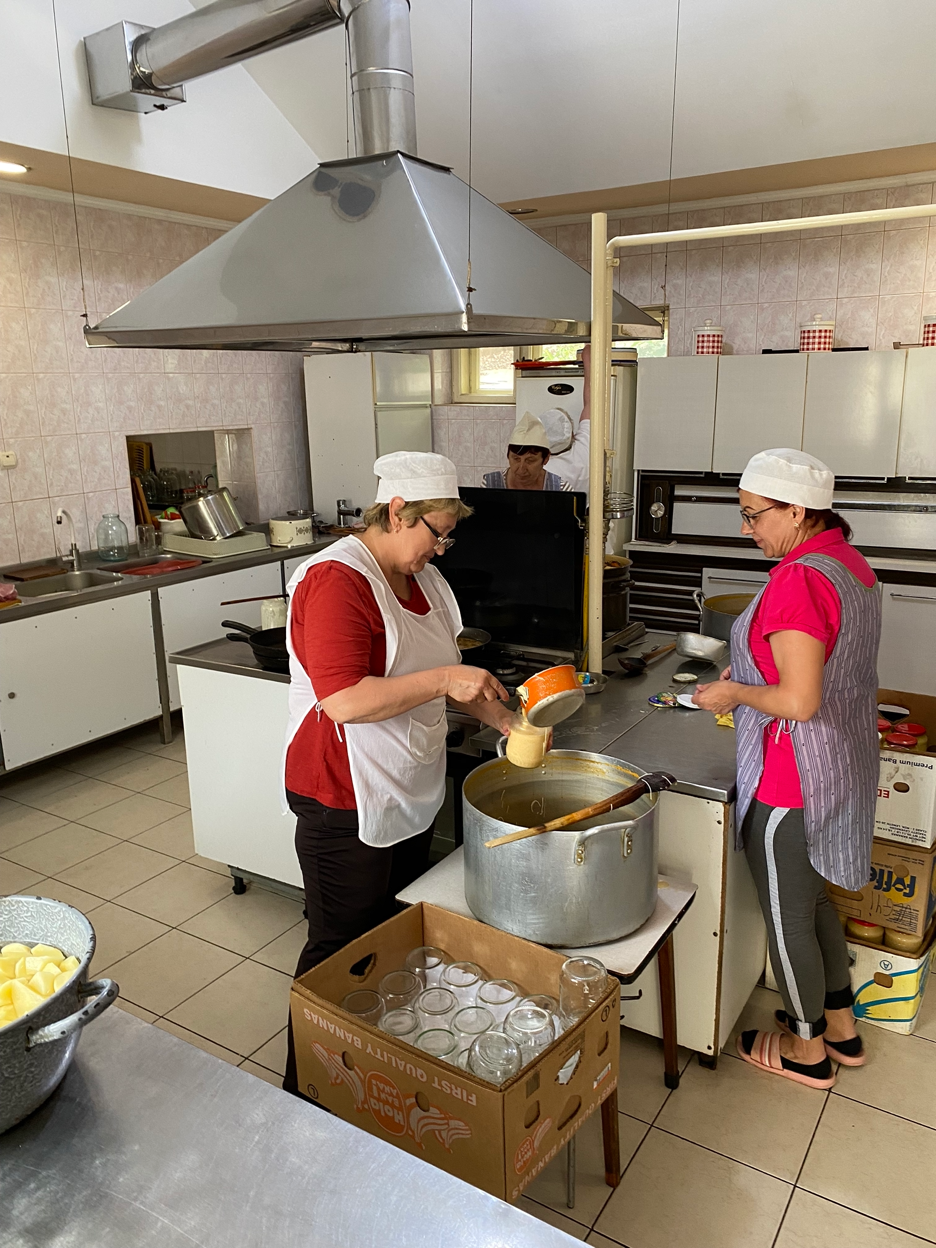
Once through the border crossing, we were soon at our destination, the diaconal center of the Transcarpathian Reformed Church. Our hosts were the director, Béla Nagy, and his wife Marika, and we were shown around the large compound with a very active “social service bakery,” a large kitchen packaging meals for refugees, a large, relatively new guest house currently housing over 80 refugees (we stayed here also, and it was relatively newly built and very comfortable), and other services like an ambulance, and services to children, the disabled, and marginalized Roma communities. We had lunch with “Bacsi” Béla Nagy and “Neni” Marika and some staff members before heading out to make several visits. Béla and Marika are the overseers of the diaconal work, with many years of experience, and connections everywhere. We were joined by the Bishop of the Transcarpathian Reformed Church, Sándor Zán Fábián, a young-looking, but very wise and kind guide who not only showed us the area, but also opened his heart to us in profound ways. 


The bearded irises were in full flower everywhere we went, standing like colorful sentinels with their maroon, purple, yellow, and white flags flying. The wisteria and lilacs were also just flaunting their natural beauty. Cuckoo birds were unaware that their calling was reminding me of storybook clocks from my childhood. Everything was so *normal* - it seemed so strange to keep remembering I was in a country whose sovereignty is under existential threat, and whose citizens just a few hundred miles away were being bombed routinely, had fled their homes, or were already among the injured or dead. 


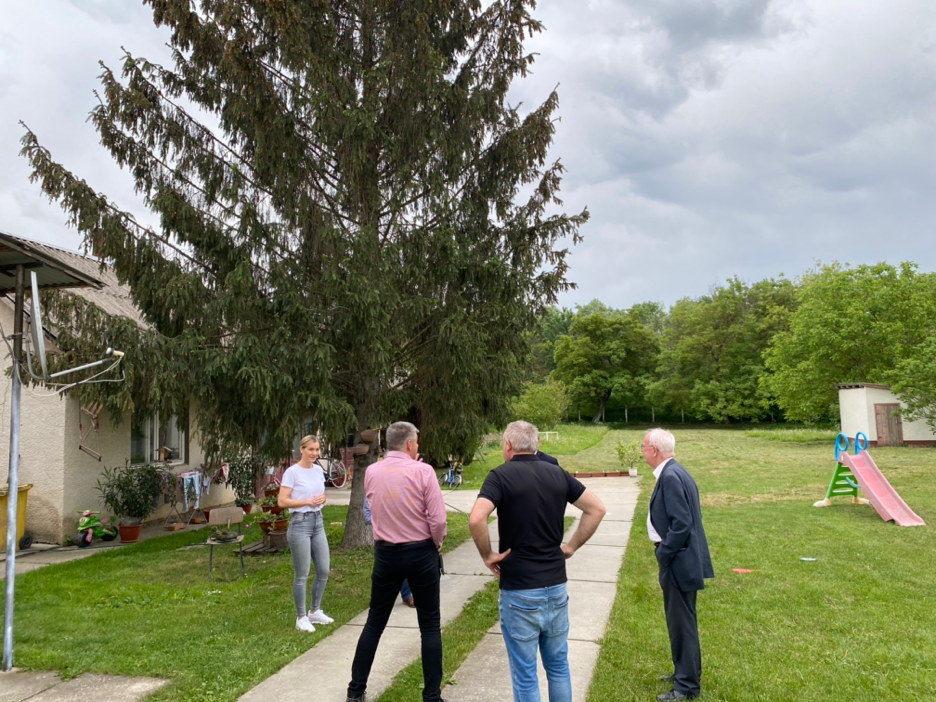
Our first visit was to a village called Badaló. There we visited an amazing after-school program set up for Roma children in the area. The building in which the program was housed, next to the church, was beautiful, relatively recently built, and well-organized. The group of about 15 children were being exposed to a variety of academic and life skills ranging from Bible verses to tooth-brushing. Bishop Fábián asked the children to raise their hands if their father was still in the home, knowing that most Ukrainian families are dealing with the reality that the men have been called to war. None of the children have fathers currently at home, and then when he asked about how many of them had mothers that were working, only one raised their hand – a student whose mother is a mail carrier. The director of the program, a woman named Livia, gave us a tour and an overview of the program, and her professionalism and care for the children was inspiring. The pastor of the local church was also there to greet us, and he showed us a basement bunker for up to 15 students that they have cleared out and filled with mattresses, blankets, food, water, and lanterns. They have not had to use the bunker yet, but they are prepared if the need arises; on several recent nights they have heard air raid sirens, but thankfully there is no active shelling in this area for the time being. At the back of the yard of the school, we were shown that what’s known as the “green border,” adjacent to the property – this is the actual border between Ukraine and Hungary, and the term “green border” refers to the fact that sometimes people cross over back and forth without going through the proper check points. 


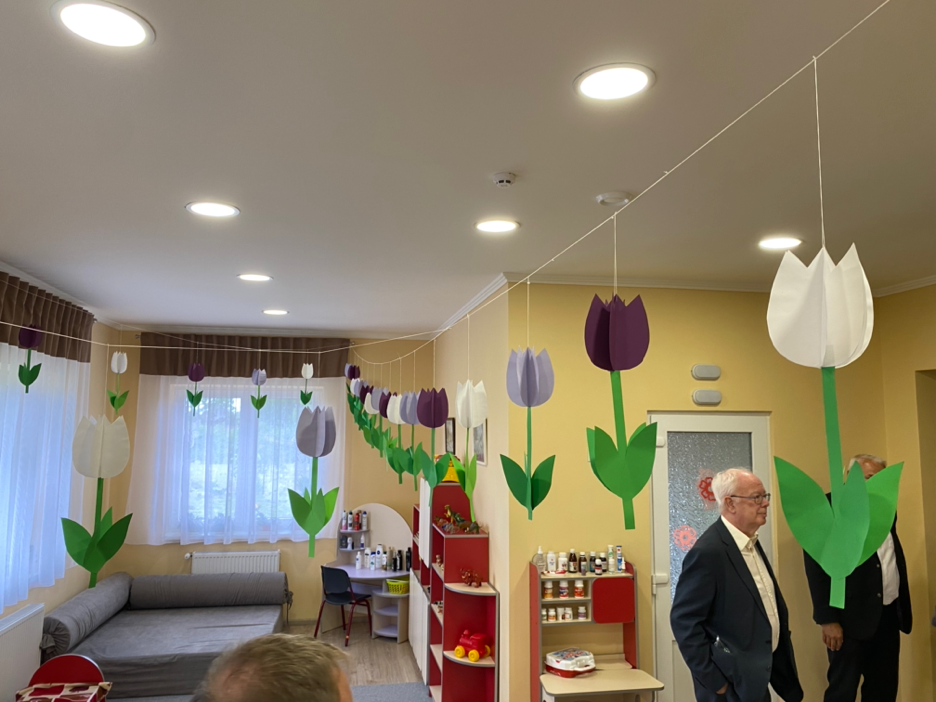
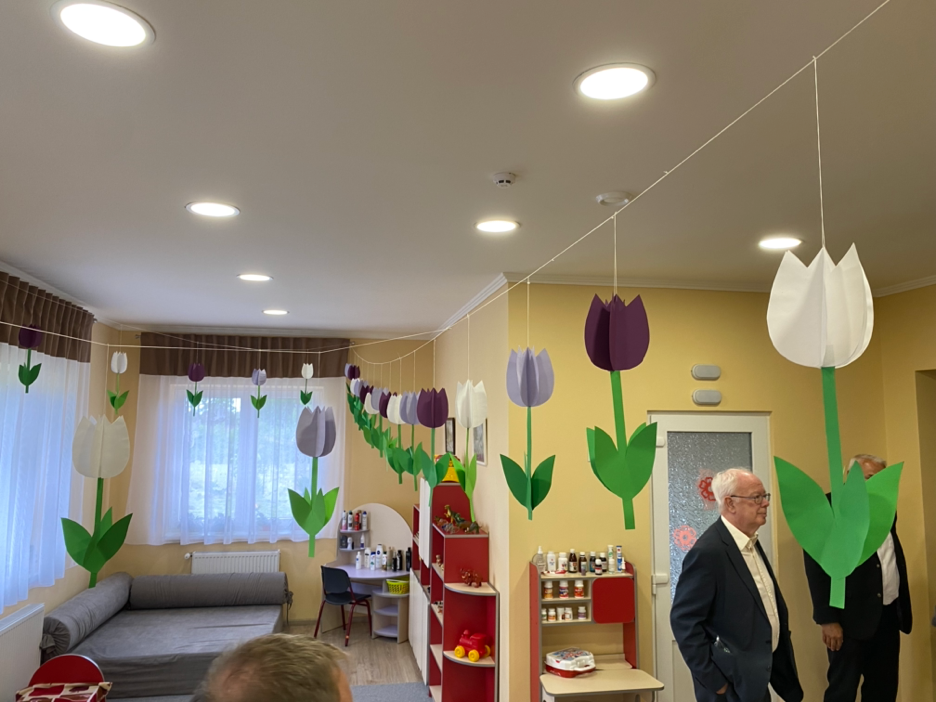
From Badaló we drove a short distance to another area with a newly built kindergarten building. We stopped to take a brief tour. When we entered, it was so quiet I assumed the children were gone for the day. Colorful paper tulips hung in neat rows from the ceiling, and neat rows of toys told me that someone had prepared for the Bishop’s visit. But I was wrong about the children. Apparently, it was nap time, and we were shown the room where the kids were in full nap mode, pajamas and all, in bunk beds in a quiet room with their teachers. These initial visits were a demonstration of the activity of the Reformed Church of Transcarpathia over the past many years to bring opportunities for school and learning to the Roma communities in this area.  


Very near to the kindergarten we took a short detour to drive through a sort of settlement with houses that were not exactly houses, and we learned that this was the “neighborhood” from which the kids at the school had come, with homes built from cardboard and pallets, a gravel and dirt road, and clear evidence of poverty and great need. Imagining the experience of children who move between these two experiences – the immaculate kindergarten building and the home with the dirt floor – was challenging. 


From here we drove to a town called Vary, where Bishop Fábián is a minister of a congregation in addition to serving as Bishop for the entire region. He pointed out the handsome old church building, as well as various other landmarks in the small town. He lingered on the experience he has as the weekly pastor for this congregation, deeply reflective when he shared that even though he is extremely busy with the needs of the entire region on his shoulders, he is deeply grateful for the weekly opportunity to sing, recite the creeds, and pray together with the saints from his own congregation. Without this, he said, he would not find the strength and peace he needs for his work. 


In Vary, from the town center, we walked up a newly developed walkway, built with help from the Hungarian town of Hódmezővásárhely in 2017 as part of the 500th anniversary of the beginning of the Protestant Reformation. It is an understatement to say that this is a seriously Reformed religious community. The walkway led us to another kindergarten, also relatively newly built, and also clean and organized. The Bishop and the Moderator and Balázs had a good time asking the children questions and engaging them.


From Vary we drove to Beregszasz/Berehove, the main city in this area. The reason this city of 23,000 has two names is complicated, but essentially it is because in the past century a person living in this area of what is now Ukraine has changed countries five times without ever moving. The region has been a part of the Kingdom of Hungary, Czechoslovakia , Hungary again, Ukrainian Soviet Union, and since 1990, Ukraine (even this is a vast simplification). Beregszasz is the city’s Hungarian name, and Berehove its Ukrainian name. Shops and signage all over the area have mostly Hungarian language signage, and people still worship, learn, and conduct their business in Hungarian. Over the past century, many ethnic Hungarians have been actively discriminated against by the Ukrainian education system and government in general. It’s a region marked by historical conflict. 


In Beregszasz we visited the Beregszasz Reformed Church. We were given a tour by Rev. Ferenc Taracközi, one of six pastors on the staff. We learned that this worshipping community was shaped by the events of the late 1500s and the Protestant Reformation. They built a church in the early 1700s and had a 900-pound bell cast for the belfry. In 1918 the bell was requisitioned by the Austro-Hungarian military command to be melted down for munitions. In the process of this removal, the wooden belfry caught fire, and the church suffered huge damages. But in the summer of 1921 the harvest of the nearby vineyards was so abundant it was considered a harvest blessing, and much of the church property was able to be rebuilt and restored. The congregation hosts daily worship services in Hungarian, and has recently begun offering daily afternoon services in Ukrainian for newly arrived refugees. On site they have a Christian radio, and television station, a publishing house, and a large high school with a dormitory. Since courses are currently on-line, the dormitory is currently housing 90-100 refugees from eastern Ukraine. We toured the dorm and met Lilly, a young Ukrainian English teacher who had fled with her family from Kharkiv a few weeks earlier. She told us that her husband is a dentist, and his dental clinic is on the ground floor of the building they live in in Kharkiv. When the bombs began to fall on the morning of February 24th, they could not believe it, but they quickly moved to the clinic for safety, where they sheltered with other families from the building for several days. After about a week, during a lull in the bombing, they decided to try to escape by car, and they drove for several days to western Ukraine, where they found shelter in the Reformed church dormitory in Beregszasz. We also toured the state-mandated bomb shelter in the basement of the dormitory, a grim cement cellar with donated mattresses on wooden pallets, and blankets, food, water, and battery-powered lighting. It has not been needed yet, but it is prepared just in case. 


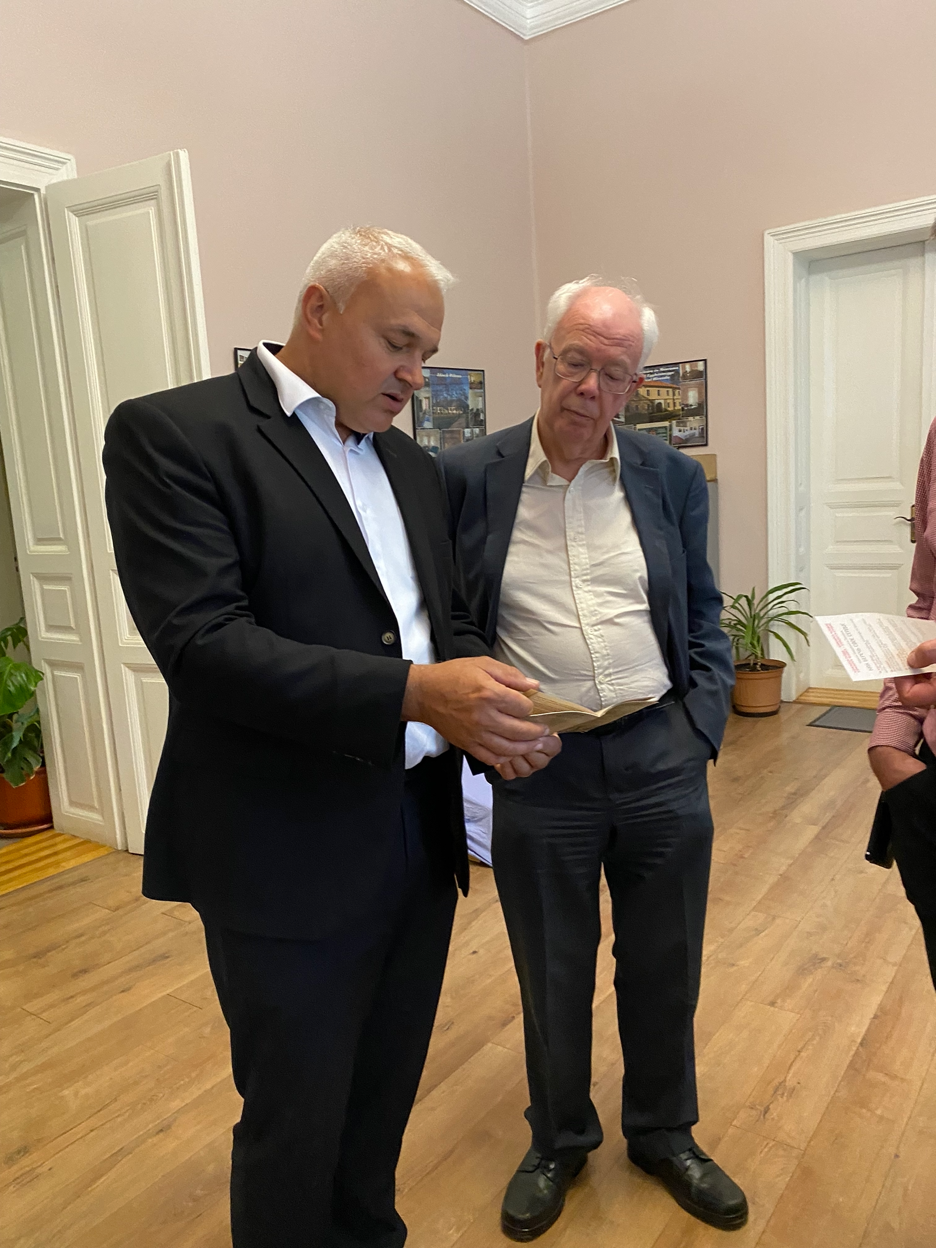
Our final visit of the day was to the Bishop’s official office, a restored estate house where lots of literature was prepared for distribution, and other supplies were coming in and out regularly. We met a person from Budapest who was on his 78th trip since the war began (it was day 82 of the war when we were there), and he brings a large cargo van filled with supplies nearly every day and drops them off at the Bishop’s office, where they are then moved further into the country where most needed. We heard the Bishop’s vision for peace, when he shared how he is not encouraging the Christian believers in this region to pray for victory, but instead for peace, and the miracle of forgiveness from both sides. He told us about another vision he has, for the building of a modest community of small homes on the estate property, where retiring ministers might come live – it is apparently the case that because of the regional poverty, many ministers do not have any retirement savings or income, and these small houses could provide a community while also relieving an enormous financial burden on these retired pastors. 


Finally, after the Bishop’s office, we were treated to a celebratory dinner in a nearby hotel banquet hall. The Scottish delegation was not the only international group visiting that day, there was another team – a group of Unitarian believers from Transylvia in Romania – as well as a small delegation from Utrecht in the Netherlands who represent an NGO that partners to bring supplies to areas experiencing poverty and war. Together we shared stories of mutual learning over a large meal with plenty of locally made meat, salads, and for dessert the famous and delicious palacsinta, a thin pancake with fruit or cheese (or poppy seeds!) filling. I sat between Janos, a local man who works for an international church aid organization and Neni Marika, both of whom were more comfortable in Hungarian than in English, so I got lots of practice for my language learning. 


In the morning after a quick breakfast, we returned to Budapest where I joined the Scottish delegation in a lunch at our church, St. Columba’s Scottish Mission, and we were joined by Rev. Aaron Stevens, Julie, and a few other members of the church community. 


Overall it was a very quick, but a deeply meaningful opportunity to see amazing reconciliatory work being done in very difficult circumstances. It was a privilege to be part of such an obviously committed international team of delegates who are committed not only to doing good and charitable things, but to doing them in careful partnership. The work of the Bishop and the diaconal ministry leaders in Transcarpathian Ukraine is difficult, but very blessed. I came away hopeful, and with a broadened vision for God’s Kingdom.


Jeffrey P. Bouman, Ph.D.


Leadership Trainer, Resonate Global Mission


signature_1503055026


 May 2022

Dear friends, 
Another full month has passed, and we are very pleased to report that April was a record-setting month of financial support for us in our ministry here in Budapest. Thank you. We appreciate each of the 74 monthly donors, the 5 church partners, the dozens of one-time givers, and the hundreds who keep us in faithful prayer. Each of you is a blessing and a partner with us in this work and ministry. This increase in April is no doubt associated at least in part with the war next door in Ukraine, so we are not exactly pleased with the mounting refugee crisis as the possible external catalyst for support, but we are grateful that God’s people are paying attention to the developing situation. We continue to pray for peace, but while we pray, like you, we work.
 
Our work has continued in intensive language learning, with daily lessons in Hungarian and humility. We are improving, but it is slow and difficult. We plan to take a B-1 language exam in June (and success is far from certain). We also continue working with our local church, St. Columba’s Scottish Mission. The group of international students we host weekly in our apartment now includes several students who are displaced from their studies in Ukraine. I (Jeff) also continue to manage the volunteer efforts of our church community in providing a weekly distribution of food for newly arrived refugees, as well as a 5-times-per-week warm lunch provided for a few dozen displaced students here in Budapest.
 
The work with the Reformed Church Refugee Ministry has moved forward, and we are now helping to manage a very large grant from Western European ecumenical partners that is designed to meet the short-, medium-, and long-term needs of Ukrainian refugees in Hungary with everything from immediate cash assistance to housing and employment and educational needs. As you might imagine, attempting to develop longer range plans in the midst of an ongoing catastrophe is an organizational and bureaucratic challenge, so things are moving forward, but slowly. We met this week with our team at the refugee ministry to begin developing regular programming for families with children who live in the Budapest area.
 
Early in April, we were very grateful to host several former colleagues from Calvin College who were in Budapest for a conference promoting Christian higher education in a fractured world. Jeff gave a workshop on the importance of pedagogies like service-learning, and we re-connected with several very good friends from Grand Rapids (and Lithuania!). Jeff was also invited to give two other talks in April, one to a student Christian group at the university, highlighting the journey that has taken us to this major life transition; and the other a faculty workshop and prayer breakfast with Christian faculty at the university, designed to offer a window into creative teaching and learning. In the midst of these extra opportunities, he continues to offer the B2 level English course as well.  
 
We hosted visitors on 18 of 30 nights in April, and gratefully enjoyed a two-week visit from our son, Bastian. April was a full month, and we celebrated a very blessed Easter.
 
One very exciting new development is a pilot one-year internship program that attracted several highly qualified young adult applicants. Jeff is in the final stages of selecting two recent university graduates to join us for a year beginning this coming August as Resonate volunteers working with the refugee ministry, as well as helping to develop a more robust cohort program with Europe team colleagues. Pray for discernment in the selection process, and for wisdom for these young people as they make significant decisions about spending next year in Budapest.
 
As the end of another academic year approaches, we are mindful of our unique position and opportunity here in Budapest. All of the beauties of spring are in tension with all that is wrong in the world. We live in a beautiful cosmopolitan European capitol, and we also acutely feel the effects of a misguided violent conflict in our neighboring country. As our language abilities increase, and our friendships develop, please pray with us that the Prince of Peace would be made manifest in our work, our conversations, our teaching, and our fellowship.
 
Thank you for your continued support.
Peace,
Jeff and Julie

For those still interested in joining in partnership with us financially, you can find the link to support us here. We are very grateful for the many new monthly donors who have made commitments in the past two months - thank you!

A few photos of our April can be found below:


"Love Thy Neighbor" graffiti overlaid with a heart for Ukraine...

An art exhibition in our nearby public park displayed several works committed to telling the story of brave Ukrainians.

A nice reunion with Claudia and Shirley, long-time colleagues at Calvin who attended the INCHE conference here in Budapest.

It was great to re-connect with Don and Kathy on a beautiful spring day.

We were glad to host Steve and Chris Van Zanen from Lithuania too!

All dressed up for my faculty lecture at a prayer breakfast at Károli Gáspár University.

We enjoyed touring the city with Bastian while he was here.

Mom and her favorite son at the cherry blossoms on Castle Hill. 

Julie at a lookout tower we hiked to with our Hungarian teacher in late April 

A night at the Frans Liszt Music Academy with our Thursday evening international student fellowship group.

Wednesday, April 27, 2022


April 4, 2022


Dear friends,
Our update for you today will be split into two parts. The first section will be an update on the rapidly changing cadence of our lives here in Budapest as we figure out how to best serve the Ukrainian refugees coming through Budapest while still fulfilling our other obligations. The second part of the update will be a letter from a good friend and monthly supporter, Joel Sytsma. He explains why he and his wife, Amy, have chosen to support us in our mission in Budapest. When Joel wrote a few weeks ago with this letter, asking us if he could offer it to you, it was a very good reminder of the nature of partnership we value between each of you already supporting us regularly, those of you who have supported us in the past, and those of you still considering a financial gift or monthly pledge. We could not do this work without you, and you also could not be represented here in the way we are without us. We value this reciprocity, and so we offer Joel's letter as a reminder of that.

If you'd like to join our team of support as well, you can do that here.


Boumans in Budapest
On the ground here in Budapest, the month of March was a blur. As I mentioned a few weeks ago, our local English-speaking congregation opened a short-term shelter in early March to house people fleeing the war in Ukraine. We have since closed, reopened, and then once again closed the shelter due to changing needs and changing processes put in place by the government. Our leadership team met late last week, and we are making a pivot to opening up a food bank this coming week for those who have stayed in Budapest, and we are exploring other best ways to serve the immediate and longer term integration needs of the thousands of displaced people now living in and around Budapest. It has been rewarding, but exhausting work. 

We have continued with much of our other work - this week I showed the 2016 documentary "Look and See: A Portrait of Wendell Berry," to my English class at the university. We continue to host weekly international student gatherings, and our group now regularly includes students who left Ukraine but are now pursuing either work or study options in Budapest. Resilience. We participated in a visit from delegates of the Churches Commission for Migrants in Europe, as well as church leaders from the Rhineland, who were interested in continued partnership with the Reformed Church in Hungary's refugee ministry. We met at a Pakistani-Indian restaurant that has not opened yet (scheduled opening is April 10) belonging to a Christian Pakistani man who has been living in Hungary for 45 years. There was singing and prayers in at least 5 languages around the beautifully-lit, delicious-smelling restaurant. And Friday last week, I (Jeff) had the treat of playing basketball with Pauline, a 22-year-old Kenyan student who is in our fellowship, at a nearby park. We were challenged to a game, as it turned out by 2 visiting Italian guys who were on holiday from nursing school (we won). You never know what a day will bring. This week is a big week for visitors, as Károli Gáspár University here in Budapest hosts the International Network of Christian Higher Education conference April 6-8. We look forward to connecting with friends from the US coming to the conference, with Steve and Chris VanZanen coming from Lithuania, and to many good discussions with people interested in faith-based higher education in Europe.

Finally, work continues on recruiting young adults to come to Budapest this summer and spend a year in an internship with us, working in the refugee ministry, and helping to imagine a larger program in future years.

Peace and blessings,
Jeff and Julie


Why I’m a supporter of the Boumans: by Joel Sytsma

Hi, my name is Joel Sytsma and I’m writing to tell you why I support the mission that the Boumans are on in their new home of Budapest Hungary and to encourage you to do the same (if you are convinced already, click here to get started).

But first, a bit of history: I first met Jeff Bouman about 13 years ago while he and I were co-leading a group of first-year students through Calvin University's Streetfest. I then had the opportunity to be a student of Jeff’s in 2011 in Budapest during his first of three times leading the study-abroad program there. It was during this same semester that I got a chance to get to know Julie and their kids. When I got back from that semester I began to regularly meet with Jeff over breakfast at the Brandywine Cafe in Grand Rapids. It is over those breakfasts that something like a friendship emerged. It was also over those breakfasts that Jeff met my girlfriend, Amy (now my wife and mother-of-my-child). In the almost-decade since that first meeting Jeff and I have exchanged letters and shared many meals together.

Okay, like the text at the beginning of Star Wars, I have gone on too long with the context. Instead I want to share two stories with you all and then make my final request for you to consider giving to Jeff and Julie (which again, you can do here).

Amy, Julie, Jeff, and I were wandering around a large bookstore together one day in Seattle while they were on a visit to their daughter who went to university here. As tends to happen in bookstores when in the company of curious people, the four of us separated almost immediately as we pursued our interests. Sometime later Jeff, Amy, and I got back together and we couldn’t find Julie. After a careful moment of thinking Jeff said, “I bet she’s in the children’s book section. She loves to read the latest children’s books.” It struck me as odd. I didn’t have kids at the time, Julie’s kids were well-beyond “Goodnight Moon” and I didn’t know why she would be there. However, when I read the story that was in the March newsletter from the  Bouman’s where Julie described spending the day with two children as they fled from Ukraine, it suddenly made sense to me. Julie didn’t read those children’s books to learn the latest fads in children’s literature. She read those books because she cared deeply about what children were being told. In Budapest, she has displayed that care in a much deeper way. She spent hours with children telling them, in word and action, that they are special and loved. Those kids left Budapest knowing that, whatever else may come during the rest of their unexpected and unwelcome journey, they were worth paying attention to. That they were worth being loved. I think that’s worth supporting.

On to Jeff. I have been friends with Jeff and have leaned upon him as a wise and careful listener during the following (incomplete) list of situations:

* I just broke up with my girlfriend (now wife and mother-of-my-child) and I’m freaking out a bit.
* I just got rejected from graduate school for the 3rd time and I’m freaking out a bit.
* Amy (now wife and mother-of-my-child) got a job in Seattle and we might move there from Chicago. I’m freaking out a bit.
* I just got a job in Seattle and I’m freaking out a bit.
* I’m having a kid and I’m freaking out a bit.
* Etc, etc.

I don’t tell you these situations to draw a parallel between my life and the Ukrainians streaming into Hungary right now, because they are completely and utterly different. However, I do tell you these situations to tell you that I’ve been on the receiving end of Jeff’s care as he walks alongside someone who is going through a transition. As dissimilar as my situation is from refugees running from war, I wonder if I can draw some parallels that might help illuminate why I think Jeff is so rightly placed at this moment. When one begins speaking to Jeff and the conversation wanders close to some vulnerable part of the heart, his entire posture changes. You know, that he is intensely listening, and that listening ear doesn’t intimidate but rather invites both the speaker and listener to take seriously what is being said. Then from that posture, he begins to ask questions and invite action without cajoling. It is an experience I’ve come to treasure and I cannot imagine how welcome it is for people from Ukraine who find themselves sitting across from Jeff. To feel listened to and recognized. And to sense that they have a strong advocate. And to know that the advocate will support them right now and also as they consider their next steps. What a gift Jeff has to offer and I’m proud to help support financially.

Please do consider giving to the Boumans so that they can keep doing this work. Because God knows that people fleeing war, from children on up, need some of what they are offering: 
deep and loving hospitality.

Joel and Jeff
 at a reunion Thanksgiving feast for the 2011 group at our house in GR in 2012. 

Saturday, March 12, 2022

Bouman March 2022 Prayer Letter
“All are welcome” 
 March 12, 2022 


 Dear Esther and Emmanuela, 
 You will probably never read this letter. Even if you do someday, I can’t imagine that you will remember me. We only spent part of one day together, and it was during a time of huge upheaval in your life. You were, for the moment, at St. Columba’s Scottish Mission in Budapest, after your family fled from Kharkiv, Ukraine because of the Russian military invasion. I had come to the church to help receive guests arriving from Ukraine. I didn’t know exactly what I would be doing there. Even though I wanted to help, I am still somewhat of a newcomer in Hungary myself, and I still have many questions about how to do things and get things done. But when you arrived at the church, Emmanuela, it wasn’t long before you took my hand and let me know that you wanted a tour of the building. And it wasn’t long before I realized that I knew what 5-year-olds like to do, and 7-year-olds, too, Esther. And so, while your parents took care of other things, we colored and imagined, played Find the Doggie, made a swimming pool out of a plastic lid and some sequins (those sequins could be so many things!), and as many things as we could think up to do. I eventually left the church before you did, and when I came back that evening, your family had already moved on to a place more suitable for all of you. I know this time must be so hard for all of you. Your journey to Budapest must have been long and probably scary some of the time. I don’t know how much longer your journey will last or where it will end. Maybe you will go to Nigeria, where your parents came from; maybe you will go somewhere else. But wherever you go, I hope there will always be people who see what I saw when I looked at you: two young, smart, strong humans holding a very fragile item in your hands. If they look closely, they will see that what you are holding is labeled “The Future”. And I hope they will treat you with all the respect and gentleness that our future requires. 
 With love and prayers for peace, 
Julie 

Friends, it has been a very difficult, and a very rewarding couple of weeks. A geopolitical crisis we did not anticipate has exploded in Ukraine, a country next door to Hungary. In the course of the past two weeks, the largest displacement of people internal to Europe since WWII has taken place, with more than two hundred thousand people streaming into Hungary from Ukraine to date. These people on the move are not all the same – they comprise ethnic Ukrainians, many ethnic Hungarians living in Ukraine, Hungarian Roma people who live in Ukraine, as well as thousands and thousands of international students who were studying in cities like Kharkiv before the bombardment began.

The letter Julie has written above, to two little Nigerian-Ukrainian sisters who were among the first to come through a very makeshift shelter our church has set up in Budapest, demonstrates some of the human tragedy that is unfolding. It would take too long to tell very many of the stories that have made up our lives these past two weeks, but a summary is that after nine nights and about 80 guests in our church, we have temporarily halted operations because of several positive Covid cases among our guests and volunteers. We hope to reopen in the middle of next week, and meanwhile we have disinfected the church, and a proposal has been developed that focuses our efforts. 

Because our church is one of only a few English-speaking congregations in Budapest, we have focused on English-speaking people fleeing Ukraine, which has meant serving mainly African, almost all Nigerian students who had been in university, or medical school until three weeks ago. We have written previously about our weekly fellowship meetings with international students in Budapest that meets in our apartment. It was one of these students, a 21-year-old Kenyan student here studying Economics, who made the first connections with arriving students who had fled Ukraine. 

Our church building is a close walk to the western rail station in Budapest, and he had walked there to see for himself what was happening. He met a few Nigerian students who had just arrived, and learned that they did not have anywhere to go – it was the middle of the night on Monday, February 28. He called and asked our pastors if we could open up the church, and we ended up hosting 15 students that night, with Pastor Aaron sleeping over in the church with them. By the end of Tuesday, we had supplies and volunteers to host closer to 30 people, and donations were pouring in. For nine nights and days we worked with a volunteer base of about 30 people to provide shelter, food, wi-fi, advice, and supplies for the onward journey. Some of the students have returned to their home countries, and others are waiting here in Hungary for news on whether they can transfer into Hungarian universities. 

I (Jeff) have been coordinating the volunteer efforts for St. Columba’s, and serving with the leadership for the shelter efforts. Julie has done multiple shifts helping with everything from food preparation to laundry and cleaning. We have slept over in the church multiple times. On Thursday the 3rd of March, and Sunday March 6th, we integrated our regular ministry activities to include some of our guests – on Thursday we held our weekly fellowship meeting at the church, and our circle of about 20 included about ten “regulars,” and about ten new arrivals from Ukraine, and all but one or two were African. On Sunday, a team of Nigerian students displaced from Ukraine helped lead us in worship, singing with us the familiar song, “All are welcome.” 

Let us build a house where love can dwell and all can safely live, 
A place where saints and children tell how hearts learn to forgive; 
 built of hopes and dreams and visions, rock of faith and vault of grace; 
 here the love of Christ shall end divisions; 
All are welcome, all are welcome, all are welcome, in this place. 
Let us build a house where prophets speak, and words are strong and true, 
where all God’s children dare to seek to dream God’s reign anew. 
Here the cross shall stand as witness and as symbol of God’s grace; 
 here as one we claim the faith of Jesus; 
All are welcome, all are welcome, all are welcome, in this place. 
Let us build a house where love is found in water, wine and wheat: 
a banquet hall on holy ground, where peace and justice meet. 
Here the love of God, through Jesus, is revealed in time and space, 
as we share in Christ the feast that frees us, 
All are welcome, all are welcome, all are welcome, in this place. 
Let us build a house where hands will reach beyond the wood and stone 
to heal and strengthen, serve and teach, and live the Word they’ve known.
 Here the outcast and the stranger bear the image of God’s face; 
let us bring an end to fear and danger: 
All are welcome, all are welcome, all are welcome, in this place. 
Let us build a house where all are named, their songs and visions heard 
and loved and treasured, taught and claimed as words within the Word. 
Built of tears and cries and laughter, prayers of faith and songs of grace, 
let this house proclaim from floor to rafter: 
All are welcome, all are welcome, all are welcome, in this place. (Marty Haugen) 

 The outpouring of support and refuge by Hungarians, and all Europeans, has been a remarkable shift from previous experiences, for a variety of reasons. The coordination both within Hungary between different church denominations, congregations, non-profit organizations and government entities, has been remarkable. Not perfect, but remarkable. Day-to-day life in Budapest is strangely normal, with Covid cases coming down low enough to end an existing mask mandate on public transportation and inside stores. The 200,000+ new arrivals are finding shelter in peoples’ homes, in hotels, and in other arrangements. In the English class I teach, I asked the Hungarian students to talk about their thoughts about the war, and most of them were happy and proud that Hungary has treated these refugees well, and shown that it can step up to a large challenge with hospitality and good will. 

On a more macro church level, the partnership work we are doing with the Reformed Church of Hungary’s refugee ministry has also been active. The Reformed Church Aid, which is the administrative unit that oversees the refugee ministry as part of a larger set of “social inclusion” efforts, has been working with people at the border, equipping Hungarian congregations to welcome people, and actively seeking to provide shelter and comfort to many who are typically marginalized. Many women are arriving with children, while their husbands are not allowed to leave the country, instead being asked to serve militarily in Ukraine’s defense of its land and statehood. I’ve helped with editing the English translation of website updates, and I am not in the process of helping develop a large grant proposal to a European funding organization that is seeking to provide longer term support for housing and psycho-social needs that refugee families who settle in Hungary will have in the coming years. Because of the historically fluid borders in central Europe, there are many ethnic Hungarians who live in towns along the western border of Ukraine that is shared with Hungary. Many of these families have dual citizenship, and there are lots of family connections between the two countries in this area. 

 We so appreciate your prayers for us, and for peace. Thank you to the many who have reached out in one way or another to show your support. Many of you have asked about the best way to support those involved on the front lines of this crisis. We don’t have all the answers of course, but we do have some suggestions. Our support with Resonate is crucial to our ability to help over the long term, and we have still not reached 50% of our target goal, after about 70% of the fiscal year has gone by. We would ask you to prayerfully consider a gift to our account with Resonate. Our church, St. Columba’s Scottish Mission, which has been in Budapest since the 1840s, has donation information here, and is doing good on-the-ground work. The larger Reformed Church Aid is another possibility, with gifts marked for “refugee ministry” – information is available here. 

 In other news, we are still working daily on our Hungarian proficiency, with continued progress. We look forward to some upcoming visitors, with an international conference on Christian higher education being hosted in Budapest in early April, we will see quite a few colleagues then. This past week we were privileged to have the chance to get together with partner Resonate missionaries Joel and Hailey Altena who came to Budapest for their spring break from LCC International in Lithuania. Jeff has been working hard on the project of bringing one or two young adults to Budapest for a year starting in the summer, to serve as volunteers, and to help him further develop a potentially larger volunteer year program across Europe. Julie continues to volunteer twice a week at a local high school, teach one student English weekly, and together we have begun helping a colleague learn Spanish. We continue to enjoy poetry, podcasts, music, and developing friendships. Our son Bastian will join us in April and be here for Easter, which we also greatly look forward to. 

As always, we covet your prayers, and your communication. We would love to hear any short updates on your lives, how we can be praying for you as you pray for us. 
 Praying for peace, Jeff and Julie Bouman 

 Prayer points: * For wisdom and discernment in matching our capacity to the great need to care for refugees. * For a good friend, Maria, who is searching desperately for a way to stay in Hungary after a year of voluntary service here, and some heavy challenges. * For our ability to remain focused and disciplined in language learning. * For the redevelopment of the refugee ministry, and successful grant applications leading to resources that enable it put to work it’s many years of holistic ministry and service. * A national election is scheduled for Hungary on April 3 – please pray for a leader, and a government that has wisdom and soft hearts for justice and love.

One of Julie's Ukrainian-Nigerian friends' creations during her time with us.

A message for departing guests from our temporary shelter.

Pictured at the top: thousands of Hungarians gathered in historic 
Heroes Square on March 9 to agitate for peace.


Wednesday, March 2, 2022

Where are you coming from? Where are you going? Ash Wednesday 2022

It’s been a couple of days, friends. I began writing this yesterday, but finished today, on the evening of Ash Wednesday… It was the last day of Epiphany, or “ordinary time,” the day before Ash Wednesday, otherwise known as Fat Tuesday. No paczkis this year, or any other Mardi Gras type celebration. I thought it might be nice, or at least therapeutic for me, to write down the events of the past two days as I remember them, as they have been memorable in many respects. At six on Tuesday, as I was waking up, I was planning out my morning run. But as I ventured into the normal routine of checking out what’s happening in the world (online), I was confronted with the fact that I had missed something overnight. Even though I had been in close conversation with colleagues from church about what to do about arriving refugees, the last thought I had before sleeping was that we would tend to the question more in the morning. As it turned out, one of our international students (a Kenyan) had met several Nigerian students at the train station who did not have anywhere to go. He called our pastor, very late, and was able to get permission to bring a few over to our church, which is a five-minute walk from the train station. One thing led to another, and soon there were about fifteen, all medical students who had until last week been studying medicine at a university in Kharkiv, Ukraine. They had been traveling three days continuously, and therefore were happy with what we had to offer, which was basically a place out of the cold, with internet, toilets, warmth, and welcome. So when I woke up, I was greeted with a question, “can you get to church by 8am to open the kitchen?” Of course I could. So I got up, decided to forgo the normal routine of a 5-mile run, and went to church to open the kitchen. There I met our pastor, my friend Aaron, and then Edward, the leader/pastor of this group of Nigerian students in transition. He was grateful for the place to sleep, and very clear in his goal to see the younger members of the group fly home to Nigeria sooner rather than later. The more senior members of the group, especially the ones who are slated to graduate with their medical degrees this May, he was more circumspect about. They may hang around and hope for the ability to return in time to get their degrees. How long will it last? We wonder. I offered to reach out to an undergraduate student here in Budapest who is from Nigeria, and who has been a regular member of our Thursday evening fellowship, to see if she might be wiling an interested in serving the group as a sort of tour guide, to help them find local charity and second-hand clothing shops for their journey. I texted Julie to ask if she can put together a list of these shops, and within minutes I get a detailed reply with all of the shops listed neatly and helpfully. After this I went home, a short walk, and I got ready for the day’s Hungarian lesson, starting at 10. Today we looked at ways to say “I need to,” or “I have permission to,” in various ways, and it was fun, and it was hard at the same time, as it is every day. But today I was more distracted than usual. After class I had a quick lunch. We had bought a loaf of fresh bread on Monday from the Mexican-Hungarian bakery nearby. They are the ones who last week found Julie’s wallet in their shop, and they took the time to reach out to me on Instagram to return the wallet. We will be in their debt for awhile, and it’s a good thing their bread, and other pastries, are A-1 quality. After lunch, I went to the university where I taught the small group of intermediate English students, using a favorite poem of peace and hope by Lithuanian-Polish poet Czesław Miłosz “This World" It appears that it was all a misunderstanding. What was only a trial run was taken seriously. The rivers will return to their beginnings. The wind will cease in its turning about. Trees instead of budding will tend to their roots. Old men will chase a ball, a glance in the mirror– They are children again. The dead will wake up, not comprehending. Till everything that happened has unhappened. What a relief! Breathe freely, you who have suffered much.” Czesław Miłosz After the English class, I prepared for the second class, on service-learning, and when I got there I learned that one of the students is going to have to drop the class – his family are from Ukraine (he is from Hungary, but there are many connections between the two countries), and he is very busy and worried trying to help them find ways to safely leave. Even though he has to drop the class, he is still eager to complete the service-learning hours. An atheist, he is intrigued by the concepts we had begun discussing last week, about how service, justice, and faith can intertwine. Today was even more exhausting, and rewarding. We spent much of the day, beginning at 7am, at the church. There were 27 guests last night, and we helped get a breakfast ready, prepare and clean up the kitchen and common area. Around 8:30 or 9, we learned that a new family had arrived, with a 45-day old baby, and that they were trying to keep warm in a bus at the train station nearby. I quickly went there, naïvely expecting a mom, dad and baby. When I found them, I learned that there were two families traveling together, with a total of six adults and five children. As we walked the short distance back to the church, I carried the sleeping two-year old, and her weight reminded me of the physical exhaustion that so many have felt these past 6 days of flight (and many years for others). Traveling, especially forced traveling when you do not know your destination, is cruelly confusing and exhausting. We arrived at the church, and they were able to sit, clean up, charge phones, eat, and begin making plans for their next step. I later learned that the father in the family of the baby is a cardiologist, Nigerian born, but living in Ukraine – all of the children are Ukrainian citizens. By day’s end, they had made their way to a nearby hotel. Others have taken their places at church – Julie and I return there in a short while to spend the night. We have also learned that a neighborhood restaurant has offered to begin providing lunch for up to 25 each day for our guests, and that the neighborhood laundromat has agreed to offer discounts for our guests. We joined our regular on-line Bible discussion tonight and participated in a service of Ash Wednesday observance. My most poignant moment in the discussion came when our pastor and friend Aaron made the connection between our conversations with refugees that often centers around questions like “where are you coming from?” and where are you going?” These are the same questions that we are asked to ponder on Ash Wednesday. And the answers are that we come from dust, and we are returning to dust. And for the next six weeks, we have the opportunity to ponder how that grim reality of our “dustness” is shaped and given redemptive hope in the reality of the events of Good Friday and Easter, those most important of moments in the Christian experience. In these moments of crisis, we are witnessing moments of great human compassion and empathy. We are praying earnestly for weapons to fail, for hearts to change, for the resistance both within Ukraine, but also within the Russian people. Join us, won’t you? (photo of a museum photo at the Busó museum in Mohács, depicting the arrival of the Busós by boat)

Saturday, February 5, 2022


January/February update - 5 February 2022
Boumans by the Danube
Dear friends, 
Below are a series of vignettes from the past several weeks since we've written....
Bea’s visit
We were very happy to have Bea here for a nearly-3-week visit over Christmas. We stayed mostly close to home due to the unwelcome rise of Omicron covid cases, but we were glad to be able to get to some favorite coffee shops, Christmas markets, and walks along the river. A highlight was the warm afternoon on Christmas Day when we walked to St. Stephen’s Basilica, and we realized that the upper outdoor balcony was open for visitors. We hiked up the spiral stairs to the top, and enjoyed one of the best views in Budapest, peering down on the bustling Christmas market, with views of the Parliament, the Danube river, and the scenic embankment on the Buda side of the river.
A Christmas gathering
We gathered in our apartment on Christmas Eve with 13 students, plus our daughter Bea. It was a very international group, representing at least 8 countries, mostly African (Kenya, Nigeria, Tanzania, South Africa), but also Syria, Pakistan, Hungary, and the United States. We ate good food, played games, and made new friends. After eating together, we sat in a circle and talked about Christmas in our family traditions, and we wondered together how and why the Christmas story includes the birth of a real live human baby. One of our guests was a Nigerian medical student, and he shared the story of how he had just in the past week participated in a hospital birth procedure. He was able to enlighten us with the perspective of a medical student on the many things that could have gone wrong in this scene where Jesus is born. We were all enriched by his perspective. And I was also surprised at how many of our students shared that for them as children, Christmas gifts were usually comprised of new clothes to wear to church, and later to school. A few of our guests were able to stay awake long enough to join several of us at a service of communion at our nearby church that was held at midnight, as Christmas arrived in the middle of a cold night.

This group, the international student fellowship that Julie and I lead with our partner in ministry Szabina Sztojka, will continue to meet in our home on Thursday evenings this coming semester. We have chosen as our theme to delve into what it means to love God with all our hearts, minds, and strength, while also loving our neighbors as ourselves – all within a construct of how our loves are influenced by money, sex, and power. Keeping it simple, as always.
Kalunba’s move
Many of you know that the refugee ministry of the Reformed Church in Hungary has had a difficult year. Beginning in December, and culminating on Saturday, January 8, we helped pack and move them from a large office space to a much-smaller community center space about a 20-minute drive away. It is still technically downtown, but it will be a while before it can begin to consider pre-pandemic programming, with unpacking and reorienting, and some new hiring necessary first.
Ice skating
On Thursday, January 20, we took some members of our international student group ice skating at the Budapest City Park outdoor winter rink. Since most come from countries where ice skating is not a normal activity, it was rewarding to watch many of them courageously lace up their skates, and step tentatively on to the ice. Many falls ensued, but no serious injuries were sustained. The backdrop of the Vajdahunyad Castle, an 1890s replica of a famous Hungarian castle in what is now Romania, made for some wonderful group photos.
Omicron invader
After 22 months of protection, we finally had a positive test in our household. Because only I tested positive, Julie and I spent a very awkward 10-day period of self-isolation where we slept in separate rooms, ate our meals apart, and wore masks when we were in the same room together. It may have been easier to get a hotel! But thankfully neither of us developed any serious symptoms to speak of, and now we are past it. We continue to pray for relief for those who have suffered so much loss, and many who continue to work so hard to care for others during this dark time. We are hopeful for a time when human connection will become easier once again.
Plans at the university
January is a quiet month for university students in Hungary – they have a six-week period in which to study for and take the exams for their fall courses. Our new semester will begin this coming week with course registration, and the teaching begins the week of February 14. I (Jeff) plan to be teaching two courses this coming term – one will be the same course I offered in the fall, on the pedagogy of service-learning. The other I will team-teach with another professor, a basic B-2 level English course for students who are enrolled Károli Gáspár University’s honors program, or what they call the College of Excellence. I look forward to the return to regular meetings with students.
Financial update
We continue to give thanks for the generous financial partnership with many of you. To date we have around sixty individuals or families that give to us on a monthly or a quarterly or annual basis, and those gifts from individuals make up approximately a third of our overall need. We also are grateful for five church congregations who support us on an annual basis; their support provides another fifteen percent of our need. This means that a little more than half of our annual support must come from individuals or churches who give on a more one-time basis, making the support process a bit more tenuous than we would like. If you have been considering a monthly, quarterly, or annual donation, we would love to hear from you, or have you go to the Resonate giving page, and sign up. In addition, if your church, or a church you are aware of, might be interested in partnering with us in our efforts to bring renewal, leadership training, support for refugees and other marginalized people, we would also welcome that. After seven months, or about 60% of the current fiscal year, we have raised 43% of our total goal. We would love to welcome more partners into this work, and we trust the God who provides to move the right partners through God’s Spirit. (side note: for monthly givers, occasionally the arrival of a new credit card can interrupt one’s monthly donations – if you have a moment to double-check that your gifts are still automatically deducted, that would be great…)

Conditional tense (and the race to the B-2 exam in June)
Finally, we continue to meet for 90 minutes on a daily basis with our Hungarian teacher. She gives us homework, she provides guidance on how to practice well, and she is our number one encourager. Panka is hopeful that we can both pass the B-2 level exams in June, a feat I will consider a large miracle if we do. Our most recent, and final, I think, major grammatical concept to learn is the conditional tense. This is statements like, “I would like to pay by credit card,” or “If you won the lottery, what would you do with the money?” Handy to know, but one more layer of complexity for us. 
 
Friends, we continue to covet your prayers, your communication, and for some of you, your upcoming visits.
 
Blessings and peace,
Jeff

...aaand a few photos for you...
.   
views from the lookout balcony on St. Stephen's dome, Christmas afternoon.
.   
The group at the gorgeous rink, and a close-up with Lucky, from Pakistan.